Tangible
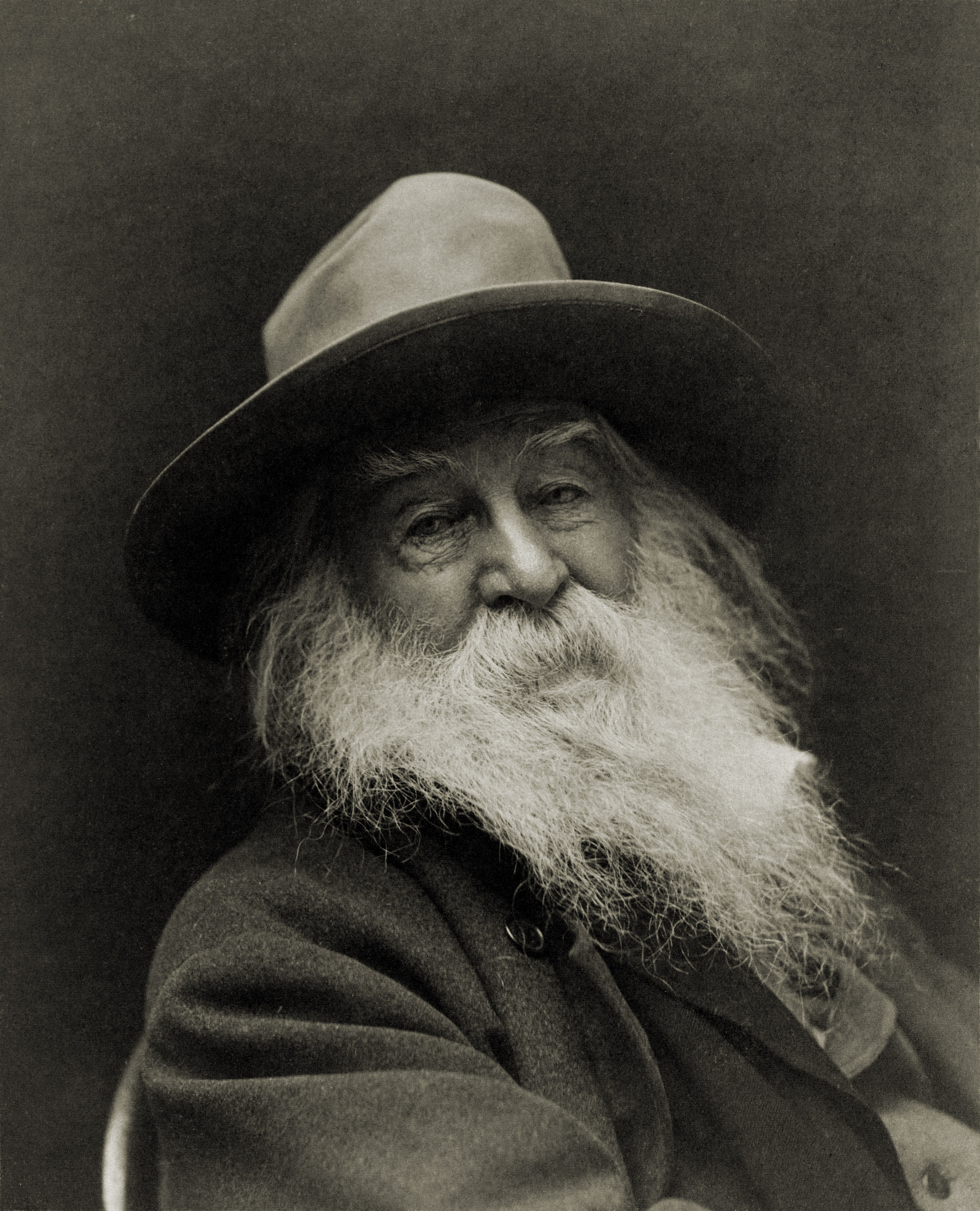
In February of 2007 I was struck with a vicious bout of depletion, my senses got dull, my stresses rose to soaring heights, my stomach would not accept food and only gave off vague but everlasting twists of pain day and night, my sleep shrivelled and wilted --- I took some time off work to convalesce and nurse my wounds which of course lead to an extended period in bed lying prone or supine from dawn to dark. It seemed like a fitting time to finally grow a beard, and being a staunch symbolist this growth of hair on the face made provided me with enough positivity to recover. All boys want beards, it is not only a rather apparent sign of adulthood that most all children crave desperately but it is also a particularly manly one for a boy growing up. Dad's have beards, lumberjacks have beards, Hemingway had a beard, so did Whitman and Rilke and Dostoyevski and even Salinger himself was seen by a passing friend sometime in 1998 sporting a soft growth on his cheeks and chin. A kid has to wait for this, a kid has to earn this, and even today lots of men simply cannot grow them.
In February of 2007 I was struck with a vicious bout of depletion, my senses got dull, my stresses rose to soaring heights, my stomach would not accept food and only gave off vague but everlasting twists of pain day and night, my sleep shrivelled and wilted --- I took some time off work to convalesce and nurse my wounds which of course lead to an extended period in bed lying prone or supine from dawn to dark. It seemed like a fitting time to finally grow a beard, and being a staunch symbolist this growth of hair on the face made provided me with enough positivity to recover. All boys want beards, it is not only a rather apparent sign of adulthood that most all children crave desperately but it is also a particularly manly one for a boy growing up. Dad's have beards, lumberjacks have beards, Hemingway had a beard, so did Whitman and Rilke and Dostoyevski and even Salinger himself was seen by a passing friend sometime in 1998 sporting a soft growth on his cheeks and chin. A kid has to wait for this, a kid has to earn this, and even today lots of men simply cannot grow them.
When I went back to work, after the couple-week stint floating in a heavenly, blissful neutrality, my coworkers were shocked to see my face covered almost entirely with a growing coverage of hair. Several detractors cited that it got in the way of this feature or that, but I gladly smiled in a world of my own without paying any attention. In college a person is fully wrapped in a warm blanket of self, and should the person decide not to shave for a day or a week or a month that is perfectly fine --- the person must only do what he wants and not bother with the unsavory "protocol" of the world. Upon graduation, after crossing the threshold into the job-world, that same person finds a terribly trembling shock: HR manuals, clothing regulations, grooming standards, and other various bits of invisible torture that get inflicted on that wonderful blanket of self that one used to carry, and cherish; traded for the chains of an office. One mustn't step out of line for fear of reprimand, oh the circle is complete: childhood is freedom, adolescence means learning rules, the twenties are a small slice of perfection before being forced back into a corner with many guns pointed at the soul. Not until senility do we re-gain that final bit of freedom before closing the door and going to bed without breathing. In this regard, the beard was a tangible rebellion: a means of recapturing a bit of self that was forcibly cast off prior to entering into the bonds of work after leaving the joys of academia. Tangible because you could feel it, touch it, it was there in the world and not a feeling locked in a single blip of breath.
There is a second layer to this: recaptured time! Assuming it takes 15 minutes to properly shave each morning, multiplied over the course of 2.5 years of working (650 shaves total) that makes for a paramount 9750 minutes spent, or 162.5 hours spent, or 6.7 days spent shaving. Picking up the razor, fumbling for the foam, lathering, dragging the blades across the landscape of the cheeks, the mountain range chin, the troublesome upper lip, under the double spout of the nose --- almost 7 full days spent performing this routine that seems so wretchedly abject and hopelessly inhuman. In Europe still, and in our own Country's not so distant past, a solid beard was a sign of respect and meant one had reached a plateau of some sort, how it came to become the bastardized image of disheveled hobo-ism is beyond me. To expect a person to do this daily, in the name of keeping appearances, is the norm. I suppose an appropriate second definition here would be "Laziness", as I was called even by a few family members. Of course, to this I laugh sarcastically and dig deep before pulling out a rationalization to defend myself with: is it lazy to stop doing things for other people in order to gain something for yourself? Selfish, perhaps, but not lazy. I find it a crime that I should have even spent a full goddamned week of my life shaving a face that was not meant to be shaved, it's a blight on man in all forms. In growing such a beard I feel the tangibility is two-fold: my rebellion against the strangles of adulthood and the tangibility of self. I quite literally have more of myself to touch, physically and metaphysically. Not only is it a beard, remember, but it is also an invisible symbol and an visible outrage against time.
The two photos that accompany this writing also seem to point towards tangibility but in a slightly obtuse sense, and it goes back to Photographing and the wonderful comment Adam had left. Photographs, the things that get taken by non-digital cameras and get processed with chemicals and the projection of light onto the emulsion-topped paper, are very Tangible objects. One can touch them, one can hold them, one can look at them, one can derive a real sense of pleasure from these several senses combining into one burst of "aha!" According to the etymology for the word:
Tangible
"capable of being touched," from M.Fr. tangible, from L.L. tangibilis "that may be touched," from L. tangere "to touch". Sense of "material" (e.g. tangible reward) is first recorded 1620; that of "able to be realized or dealt with" is from 1709. 1615, "perceptible to touch," from Fr. tactile, from L. tactilis "tangible, that may be touched," from tactus, pp. of tangere "to touch". Meaning "of or pertaining to touch" is attested from 1657.
I am most interested in this "perceptibility to touch" and imagine a fingertip expanded into a giant projection of itself with each groove of the finger's print representing a whole chasm able to be filled with the most wonderful sense of touch, the receptors popping and exploding in every manner of physical feeling. Millions of these tiny lines swirl around in a space that is less than an inch wide or high, though, and depending on the pressure applied by the finger itself these little folds are capable of producing what we call Touch. A photograph can fit in a person's fingers, just as the camera that took the photograph can, and it is a representation of what the eye saw and the fingers felt. When we bring in computers we lose more and more of this tactile quality that is so deeply valuable to the whole experience of taking the picture and enjoying it later. We trade our eyes for some math and a computer chip, as Adam pointed out, and we later replace our fingertips for our eyes: Photos get viewed on a computer screen, not between the pages of a nice-smelling photo album or as a stack to be shuffled through. This is, I think, a more rigid instance of Tangibility, much more so at least than my beard. In this we find a closer definition of Reality, though we are still touching from a distance (thank you clean-cheeked Ian Curtis!).
Above are two images that were composed on a xerox machine while working in the office I left recently. The machine works much in the same way as a traditional film camera. Light is depended on for the printing process, unlike digital printing which is all coded numbers chewed up and spit out by way of ink sprayed onto paper --- with the xerox the entire image relies exclusively on the amount of light captured. (An interesting thing occurred to me here, and please forgive yet another parenthetic digression: there is quite a huge difference between something that has "Developed" and something that has been "Printed". Worth mining later.) This fine line between failed image and successful one, I think, brings the process closer to that of Reality or that of Experience, something touchable. Mistakes on a photocopy will always thrill me much more than mistakes on a photoshopped picture. Why is that? It shows evidence of a person at work, their hands at least, whereas with the computer one is at the whim of its equations and the mistakes made are actually not mistakes since the computer is incapable of having an intention. Photographs and photocopies, though, are actual things one can make with the hands, one can enjoy with the hands, and one can crumple and throw away with the hands. A computer can only perform a series of preset automations and churn out same image upon same image one after the other and it is this infallibility that distances it so far from our body and our body's intentions. The mistakes created with a photograph or a photocopy can never be reproduced by means of a computer and photoshop since it can never account for the hands of a person. This inability to extract the art from artifice is reason enough to trust in the hands, the lens, and the light --- and I can't help but reel around the thought that something Tangible will always be worth more.
I come across the line often, "her grief was tangible", and I am often left feeling empty. I cannot touch her grief, how can it be tangible? By her blurry eyes and tear stained cheeks? By her downward pointing lips? By her voice escalating in whoops until the breath dissipates entirely? I tug my beard and hide my fingers in it and I think: "My youth is tangible" even in this thing that only adults can make, and I know what the word means in my own way now.